
Madison applies for Drew Forest purchase grant funding, calls on university to cooperate
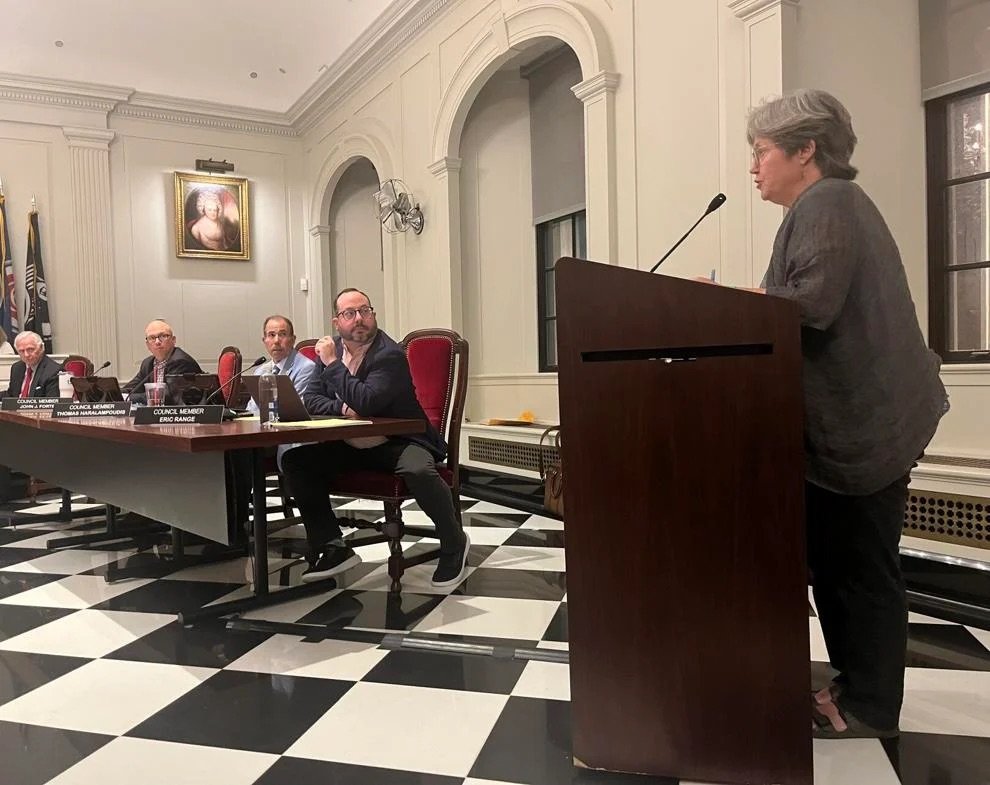
Christine Hepburn of the Friends of the Drew Forest calls on Drew University to agree to a conservation sale with the borough of Madison to save the threatened forest at a Monday, June 12 Madison Borough Council meeting. Seated, from left, are Borough Administrator Ray Codey and Borough Councilmen John Forte, Tom Haralampoudis and Eric Range.
Photo by Alex Parker-Magyar
MADISON – The borough has submitted its application to the Morris County Open Space Fund for $10 million in grant funding to contribute to a purchase of the Drew Forest from Drew University.
Mayor Robert Conley and Madison community members hoping to preserve the forest from development continued to implore the university to come forward and partner in the effort at a Monday, June 12 Borough Council meeting.
The university has sought to have much of the forest rezoned for multi-family housing and sold to a developer to mitigate its financial troubles.
Conley said the $10 million funding request “represents a substantial support to the purchase price and permanent preservation of the forest. Receiving this grant will be a major step towards saving the forest, but we aren’t there yet.”
He noted borough officials presented a written offer to purchase the forest from the university when they met with members of the university’s Board of Trustees on March 28.
“Our grant request was based on this offer and as of Friday’s grant submission we have not heard back from Drew on this offer,” he said.
Conley said Drew University must first agree on a sale price and a subsequent purchase contract with Madison for the grant application to go forward.
“We certainly hope that Drew joins us ... in supporting the saving of the forest, going beyond the verbal commitment to save the forest with an agreement that ensures that Drew will forever be ‘The University in the Forest,’” he said.
University Response
Drew University President Tom Schwarz and Board of Trustees Chair Bill Landis responded to the comments in a joint statement Wednesday.
Their statement is as follows:
"Drew is, and always has been, willing to reach a resolution to preserve the forest, any inference otherwise is not supported by facts or history. We have never proposed to develop the forest, but Madison must value that land at a fair market value.
"For three months, we have been waiting for a response to our proposal that accomplishes everyone’s goals - it preserves the forest, it monetizes our unused lands, it does not burden current taxpayers, and it allows Drew to provide much-needed financial aid to our students. Madison has not responded to this win-win proposal, nor have they provided an avenue toward appraising Drew’s lands, which has led us to where the issue stands now.
"Three years ago, Drew advised Madison that we wanted to monetize portions of the campus that were not being utilized to help build our endowment for financial aid. Since that time, Drew has complied with all of Madison’s requests to move this effort forward. We hired consultants, performed surveys, and participated in numerous meetings. In total, Drew invested nearly $1 million at the request of Madison. Our goal has always been to work with Madison towards a quick resolution and to continue to be good neighbors. Now it is time for Madison to stop playing politics and meet Drew at the table, ready to make a deal."
‘Going Beyond The Verbal Commitment’
Back at Monday's council meeting, residents continued to speak out on the issue.
As numerous residents, Drew students and alumni and environmentalists have advocated for the preservation of the threatened forest for more than two years now, Conley turned to a new, non-human party to weigh in on the issue. He asked ChatGPT, the artificial intelligence “chatbot” that culls information from the web to form responses, to write an article on the Drew Forest.
Conley read aloud the lengthy, automated response from ChatGPT, which the chatbot titled “Preserving the Jewel.”
One of the many things that ChatGTP highlighted in its response was that the Drew Forest “fosters a sense of community, pride and connectivity, serving as a gathering place for events, and community celebration,” in addition to numerous environmental benefits.
Conley corrected that although the Drew Forest does not hold many celebrations it does host many nature-based programs. The main point behind sharing the ChatGPT essay was to show that even ChatGPT supports saving the forest.
During the second public comment portion of the council meeting, Hardwick Township resident and Save the Drew Forest member Christine Hepburn shared her thoughts on the recent developments with saving Drew Forest. A former Madison resident, Hepburn, a co-founder many years ago with Judy Kroll of “Madison Matters,” a local citizen’s land use group, lived for many years directly adjacent to the forest on Glenwild Road.
She began her comment by addressing the recent air conditions from the wildfires in Canada.
It was during one of the more particularly smokey days that Hepburn was walking through the Drew Forest. She said it was not until after coming out of the forest that she “started coughing and noticed the smoke.” There were a couple of people with her who shared a similar experience.
“Trees reduce air pollution, pollution that consists both of gaseous matter and also particulate matter. The fine dust, tiny particles, thinner than a piece of your hair that comes from car and other exhaust and from fire,” Hepburn said.
“Smoke from fire in fact contains particularly dangerous particles for the health of our lungs and our hearts.”
Hepburn then told the council that she found that maple trees have been shown to reduce three pounds of air pollution in one year.
“Just one acre of trees in New Jersey has been shown to remove on average 76 pounds of air pollution per year,” Hepburn said.
Hepburn addressed Drew in the final minute of her comment.
“I’d like to talk to the powers that be at Drew University. Property owners do not get zoning changes they want in order to maximize the price of selling their property,” Hepburn said, referencing the university’s unsuccessful attempt to have the property rezoned for housing.
“People at Drew, I hope you’ll think hard about that fact when considering the offer to make millions and save your forest.”
Hepburn’s challenge was followed by a thank-you to the mayor and council members for advocating for a more effective, “win-win” solution to save Drew Forest through a conservation sale. She pointed to a similar effort that bore fruit earlier this month in Illinois, where Evansville University agreed to sell 42 acres of forested campus land to its home city rather than to a developer.
“The university president said, ‘we wanted to make sure that what we’re doing is right for the city of Evansville,’” Hepburn said. “We call on Drew – its president and all of the trustees – to respond to the purchase offer from the borough with the same sense of community and generational stewardship as the president of Evansville University.”
Editor's note: This story was updated Wednesday morning, June 14, to include a statement from Drew University.
Madison is moving closer to completing its $23.8 million purchase of the Drew Forest, with borough officials outlining a funding plan that could ultimately bring the cost to local taxpayers below $7 million.
The Borough Council approved two additional financial measures Monday, Sept. 28, as officials work toward closing on the property following more than five years of preservation efforts.
The purchase would protect approximately 47 acres of Drew University property, including mature woodland and glacial ponds. The forest also serves as a recharge area for the Buried Valley Aquifer, an important regional groundwater resource.
"We hope to close on the Drew Forest in the next six weeks or so, but we'll only execute the bond purchase when we are fully confident that closing is imminent," Councilman Eric Range said.
During public comment, Madison resident Judy Kroll, co-chair of the Friends of the Drew Forest, praised borough officials for continuing to identify funding opportunities throughout the lengthy preservation effort.
She also encouraged residents to take advantage of the changing season and visit the property.
Morristown Green July 31, 2026
The Friends of the Drew Forest has launched a public campaign to raise the final $5 million needed for Madison Borough to purchase and permanently preserve the more than 47-acre Drew Forest.
The campaign, It’s Time to Save a Forest, comes with a significant incentive: An anonymous donor has pledged to match contributions dollar for dollar, up to $2.5 million. The nonprofit hopes to reach its fundraising goal within the next few weeks.
A major milestone came in January, when Madison Borough and Drew University signed a purchase agreement for the property. Under the agreement, Friends of the Drew Forest is responsible for raising $5 million — including the matching funds — toward the acquisition. The remainder of the purchase will be funded through municipal, nonprofit, county, state and federal sources.
The organization, led by co-chairs Judy Kroll of Madison and Lydia Chambers of Harding, has spent more than three months quietly soliciting donations before launching the public phase of the campaign.
“Seeing the generosity and dedication of this community has been truly humbling, and I’m pleased to report that we are now very close to the finish line,” Kroll said.
“With continued support from our friends and followers, we will reach our fundraising goal,” Chambers said. “Once Madison purchases the forest, we will no longer be in danger of losing that beautiful, mature, and biodiverse forest and all of its benefits.”
Supporters say preserving the forest will protect wildlife habitat and biodiversity while providing cleaner air, stormwater protection, aquifer recharge, carbon sequestration and relief from the urban heat island effect. The property also serves as a living laboratory for Drew University students and offers public access to a mature woodland.
MADISON - Another necessary step was taken on Wednesday, July 29, to save the Drew Forest as the Planning Board approved a lot subdivision to make way for the borough’s ownership of the forest.
Part of the borough’s purchase agreement with Drew University is a commitment from the Friends of the Drew Forest to donate $5 million to the university. Some $2.5 million has been pledged by an anonymous donor, and the Friends are fundraising for the other $2.5 million.
Anyone who wants to donate can visit friendsofthedrewforest.org.
This subdivision application was unusual because it had no proposal for development. Also, the Borough of Madison itself was an applicant before its own Planning Board.
“Not only is some land put aside for public use, recreational use, open space, but the university use is also preserved in the university zone,” said Stephen Joseph, an attorney representing the borough in the role of the applicant.
Madison resident Judy Kroll, co-chair of the Friends of the Drew Forest, said the Friends want to share their appreciation with everyone who has worked on this application.
“This is obviously something that we have been advocating for for five years. And it’s an important official step, and it’s really heartening to see us at this stage,” Kroll said.
“So we would just like to officially say that we’re thankful and appreciative to everything the council has done and to the Planning Board and all the professionals who have worked very hard to get to this point.”
Madison Eagle, July 14, 2026.
MADISON - The Borough Council passed an ordinance Monday, July 13, to [borrow funds for] the purchase of the Drew Forest for preservation as open space [which is a step towards closing].
Part of the borough’s purchase agreement with Drew University is a commitment from the Friends of the Drew Forest to donate $5 million to the university. Some $2.5 million has been pledged by an anonymous donor, and the Friends are fundraising for the other $2.5 million.
Anyone who wants to donate can visit friendsofthedrewforest.org.
State Sen. Anthony Bucco, R-Morris, said during the meeting that he wanted to congratulate the council on the adoption of the ordinance which is another step in the long process to get the property preserved.
"I have to admit that when we started this process, I had many concerns, and as the price continued to escalate, whether or not we could put the team together but to make it work," Bucco said.
However, Bucco said, with the help of the Friends of the Drew Forest, support from the community and cooperation at all levels of government, this was able to be accomplished.
"And I think that’s something special for Madison, and I think that’s something special for this region," Bucco said.
"And it will have an impact, a beneficial impact on generations to come. And we should all be proud of the hard work that went into this and the result that will be achieved when we sign that contract and the final deed is transferred into property to be preserved."
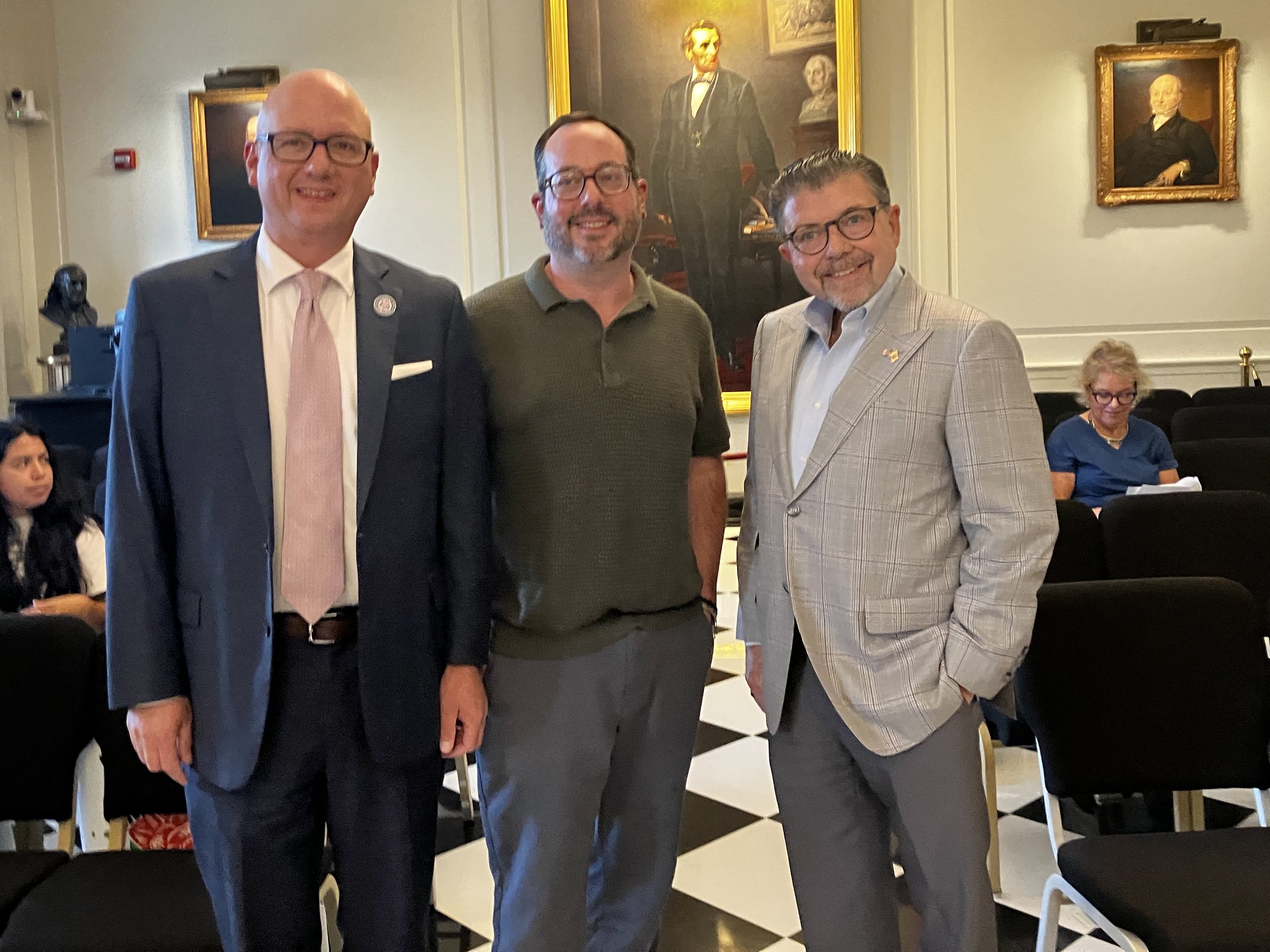
Pictured: Acting Borough Council President John Forte, Councilman Eric Range and Senator Anthony Bucco
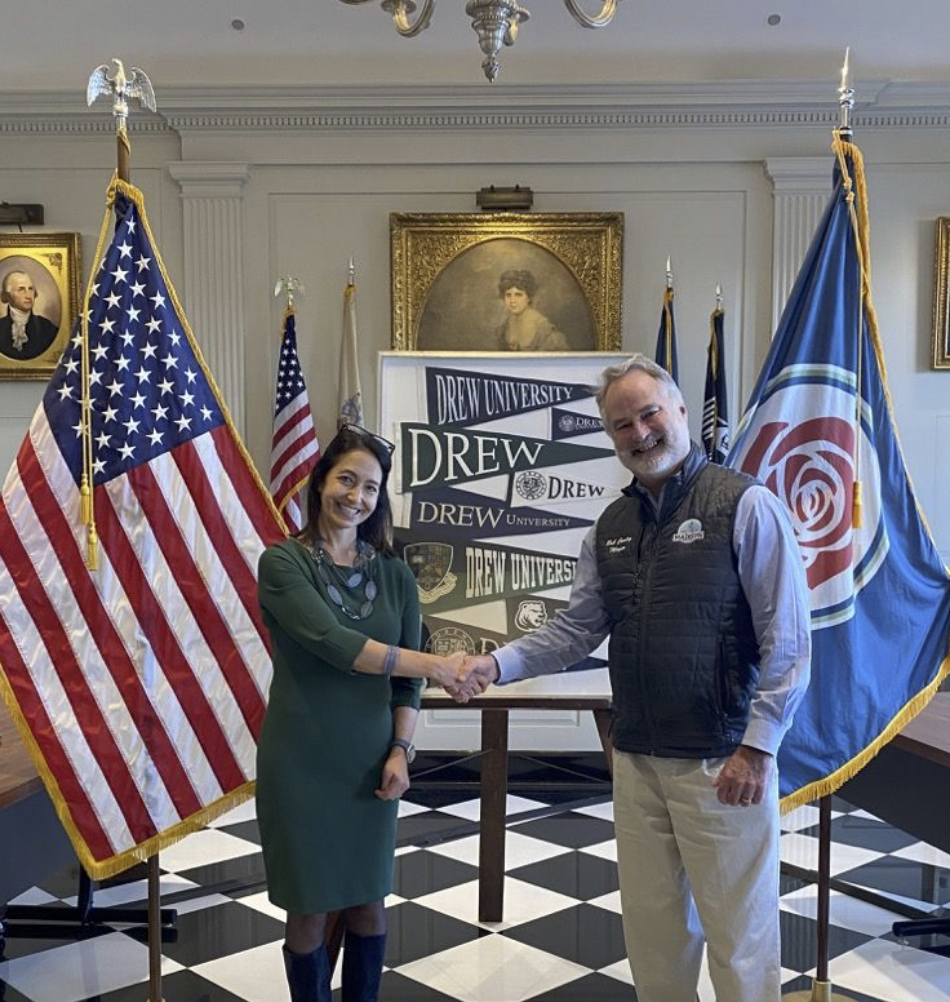
MADISON – Mayor Robert Conley and Drew University President Hillary Link signed an agreement for the borough to purchase the Drew Forest on Sunday, Jan. 11, Conley announced during the Borough Council meeting on Monday, Jan. 12.
The council had previously passed a resolution to enter a settlement with Drew to purchase the forest for preservation for $23.8 million at a special meeting on Monday, Dec. 22.
The borough also plans to buy the Madison House, a historic home at 2 Vinal Place on the campus, and some surrounding land and parking area, for $400,000.
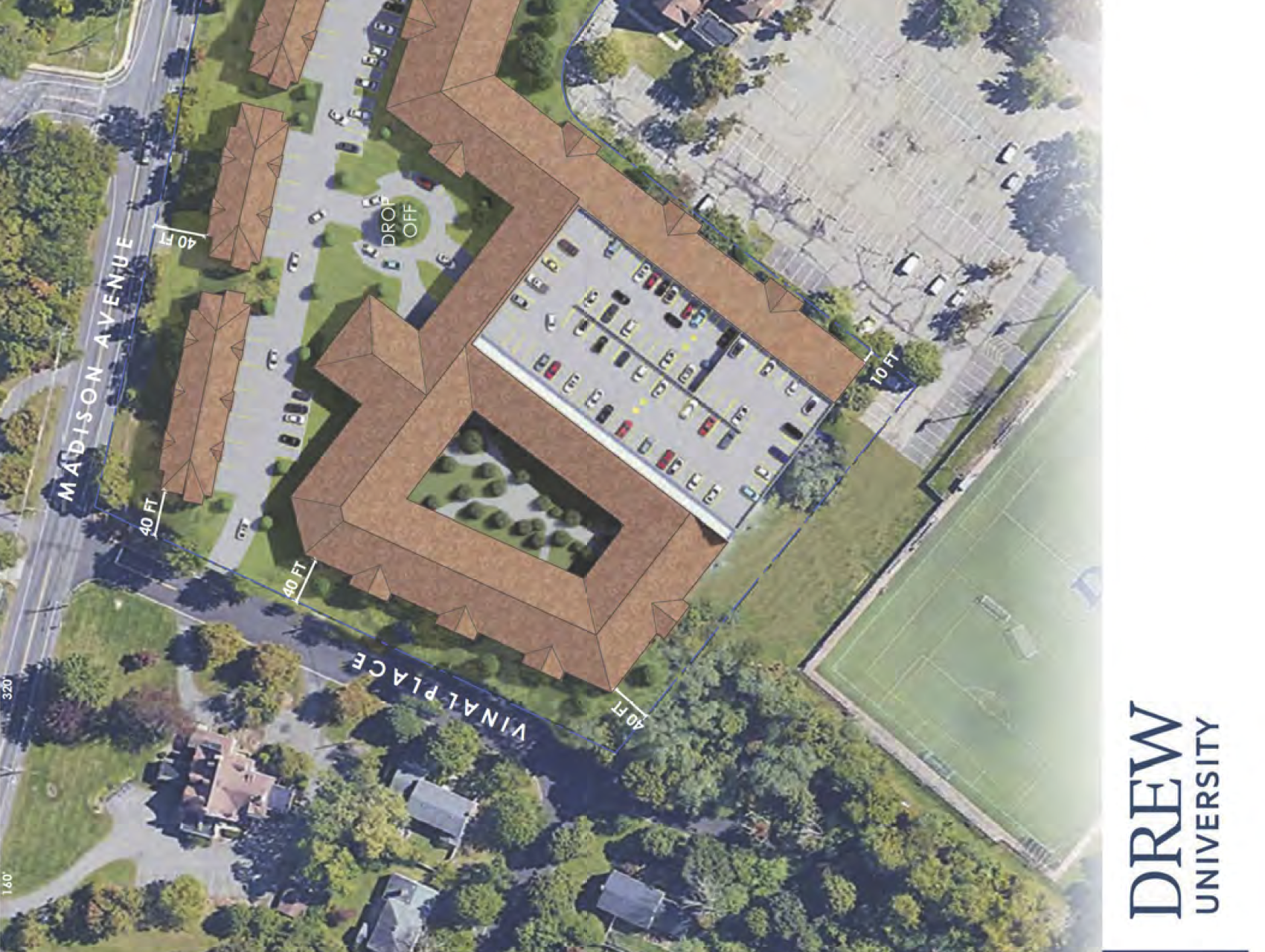
The settlement would also involve the creation of two new parcels to be subdivided for inclusionary housing and other development. One area, Parcel B, is behind the United Methodist Church in Madison, and the other, Parcel C, is between Madison Avenue and the frontage of Ranger Stadium.
The council passed a resolution at the Jan. 12 meeting directing the Planning Board to conduct a preliminary investigation as to whether this area qualifies as an area in need of redevelopment.
In another resolution, the council directed the Planning Board to amend the Third Round affordable housing plan to include this area.
Next steps include environmental testing, a settlement with the Fair Share Housing Center, the redevelopment process for the areas set aside for housing, and closing on the deal by Dec. 31, 2026, Conley said.
While there are grants from federal, state, county and local government, the deal is contingent on a $5 million capital campaign by the Friends of the Drew Forest, Conley said.
Judy Kroll, co-chair of the Friends, said the group already has an anonymous donor who has agreed to match donations up to $2.5 million, so the Friends will need to fundraise for the other $2.5 million.

You can see the video here or just hum along to “We The Friends,” which is set to the tune of "We Three Kings" Many thanks to The Spotlight Kids Company for their talents and to Drew grad David Thomson for joining us on guitar.
Verse 1
We the Friends of Drew Forest are
Standing firm, we’ve made it this far
Advocating, Speaking, Praying
Enlightening as a star
Refrain
O-oh, Save the Forest, tall and green,
Dells and wetlands must be seen
Creatures stirring, students learning
Let it thrive eternally.
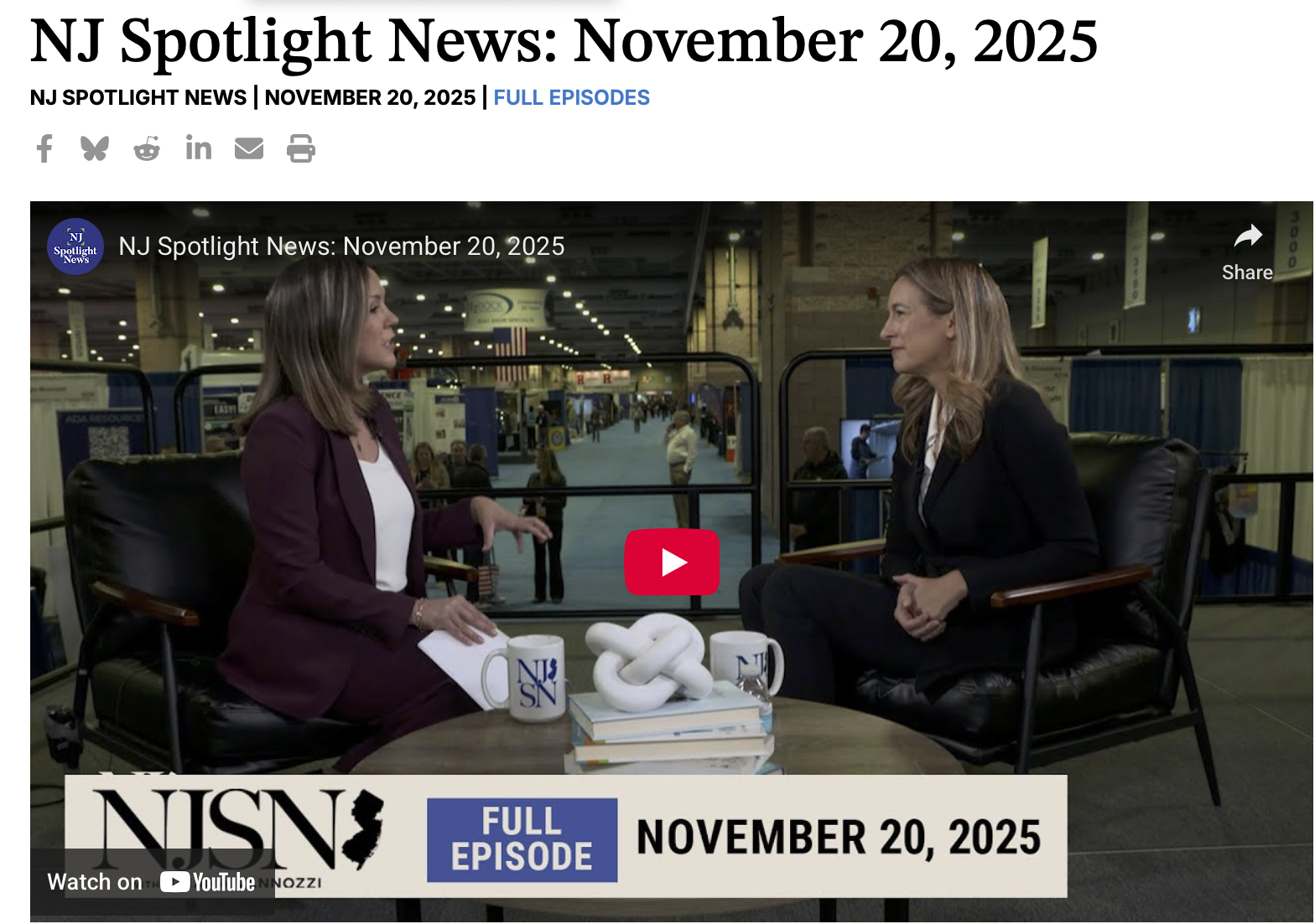
In an interview with Spotlight News' Briana Vannozzi, Governor-Elect Mikie Sherrill discusses affordable housing, smart development, and the responsibility of the government to make "sure...that we're developing in places like Trenton, like Atlantic City here which have historically had a bigger population, that want to see great development for homeowners. But [we are] also looking a transit-oriented development, which is often the more dense part of town, which makes sense and not saying, okay, we're going to go [and develop] an area of conservation... We don't want to...clearcut Drew Forest." Watch the complete interview here.
A new proposal in Trenton would allow nonprofits and religious groups to build dense housing with limited municipal oversight, igniting fresh battles
By Jim Lonergan Tapinto.net Published November 21, 2025 at 4:43 PM
TRENTON — New Jersey municipalities barely finished submitting their Fourth Round affordable-housing plans — a massive state-mandated process that will shape zoning and development for the next decade — yet the Legislature is already advancing a new bill that could force even more density, height, and development into local neighborhoods.
Senate Bill S-4736, introduced by Senators Troy Singleton (D) and Benjie Wimberly (D), is the latest proposal raising alarm among municipal officials who say the state is moving the goalposts again. The bill would give religious institutions and nonprofit organizations broad power to convert their properties into mixed-use, inclusionary developments — while limiting how much local planning boards can push back, even when height, density, traffic, or environmental concerns are at stake.

Pictured: officials from Madison and Chatham at the Drew Forest By Rebecca Heath | NJ Advance Media for NJ.comUpdated: Nov. 18, 2025, 6:53 p.m.
Several New Jersey towns are pushing back against proposed legislation in the state Legislature that would loosen requirements for affordable housing projects developed by religious and nonprofit organizations.
Towns including Chatham, Morris Plains and Monroe have passed resolutions opposing the bill, S4736, introduced on Oct. 27. The town resolutions argue that the measure’s provisions would be an “egregious assault on municipal autonomy.”
The bill would require local planning boards in the state to approve certain property conversions into housing developments if they meet the measure’s rules, and would greatly limit the reasons towns can use to reject those projects.
This would allow developers to “bypass” the local planning process, the resolutions claim.
Under the legislation, buildings could exceed local height and density restrictions, “regardless of a municipality’s ability to ensure safety,” according to the resolutions.
Projects could be built at densities up to 40 units per acre and one story taller than local zoning requirements allow.
The bill would require that 20% of the new housing units be designated as affordable, but the councils argue that allowing the remaining 80% to be market rate could make it more difficult for the towns to meet the state’s fourth-round affordable housing requirements.
“It does not make sense to mandate municipalities meet certain affordable housing requirements, to work with their professional planners, lawyers and the community to craft a detailed housing plan for the 4th round, only to have the legislature turn around that circumvents and undermines that process and preempts local zoning,” Chatham Borough Mayor Carolyn Dempsey said in a statement.

A bill moving through the New Jersey Legislature's lame-duck session might be good news for nonprofits and religious groups looking to unload property in a seller's market. Housing developers, too, could get a boost.
But other parties, ranging from municipal leaders to at least one environmental group, say the legislation would allow largely unfettered building, with little regard to local zoning laws or smart-planning goals.
The goal of the bill, introduced by state Sen. Troy Singleton, is to encourage the construction of more affordable housing in New Jersey by cutting red tape for nonprofit owners that seek to build "inclusionary housing."
"What we're trying to do, in the simplest terms, is to remove or reduce the regulatory and zoning barriers to housing development," Singleton, a Burlington County Democrat, said in an interview. "We have both an affordability crisis, a supply crisis and the economic growth problem that is tied to housing. That, to me, is why this particular piece of legislation is so important.”
Sounding the opposition is Senate Minority Leader Anthony Bucco, a Morris County Republican. He said the bill is likely to pass before year's end with support from Democratic lawmakers and Gov. Phil Murphy.
His North Jersey district includes several towns that have been pushing back on a state mandate requiring them to create more low- and moderate-income housing. That requirement has sparked a residential building boom, with more to come. Many local officials and residents say the influx has ruined the character of their towns while straining resources and increasing traffic.
Singleton's proposal, Bucco said, "is really misguided."
"It would take away the zoning powers of a municipality," he said. "That has never been done before. One size doesn't fit all. We've seen that time and time again. It's a local issue. The state should not be imposing its judgment on local municipalities.”
Why local officials are worried [read more].
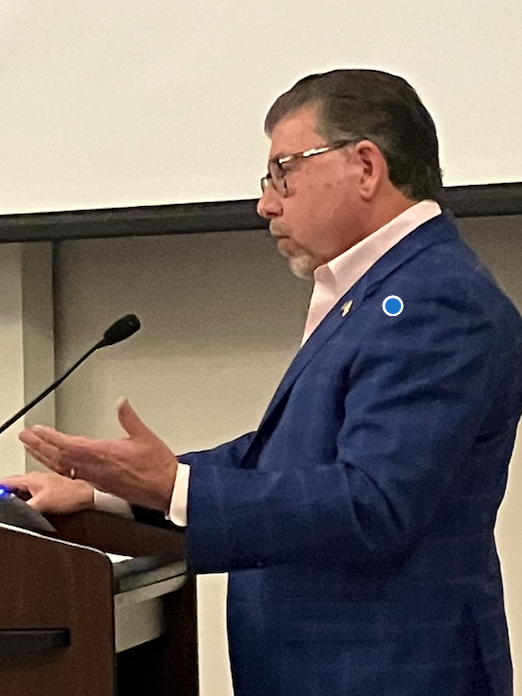
MADISON – The Borough Council voted Monday, Nov. 10, to oppose a bill introduced in the state Senate which would allow nonprofits such as universities to bypass municipal boards and master plans in order to build affordable housing, amid concerns it could negatively impact the Drew Forest.
The bill, sponsored by state Sen. Troy Singleton, D-Burlington, would enable an organization such as Drew University to build on any area of its property, including the 53-acre forest area, without requiring the borough to first re-zone the land, according to a statement provided by the Friends of the Drew Forest organization.
Also under the bill, developers would be allowed to build housing at a density of 40 units per acre and at heights up to one story taller than the tallest building in a given town, according to the Friends organization. The organization stated that developers would be allowed to build housing developments that are 80% market-rate and 20% affordable.
In addition, developers would be able to enter into automatic agreements for Payments in Lieu of Taxes (PILOTs), which is something that usually happens when towns designate areas in need of redevelopment, according to the Friends organization
State Sen. Anthony Bucco, R-Morris, said at the council meeting that the legislation is “really misguided,” and that the state Legislature has never passed a bill to remove so many powers from municipalities.
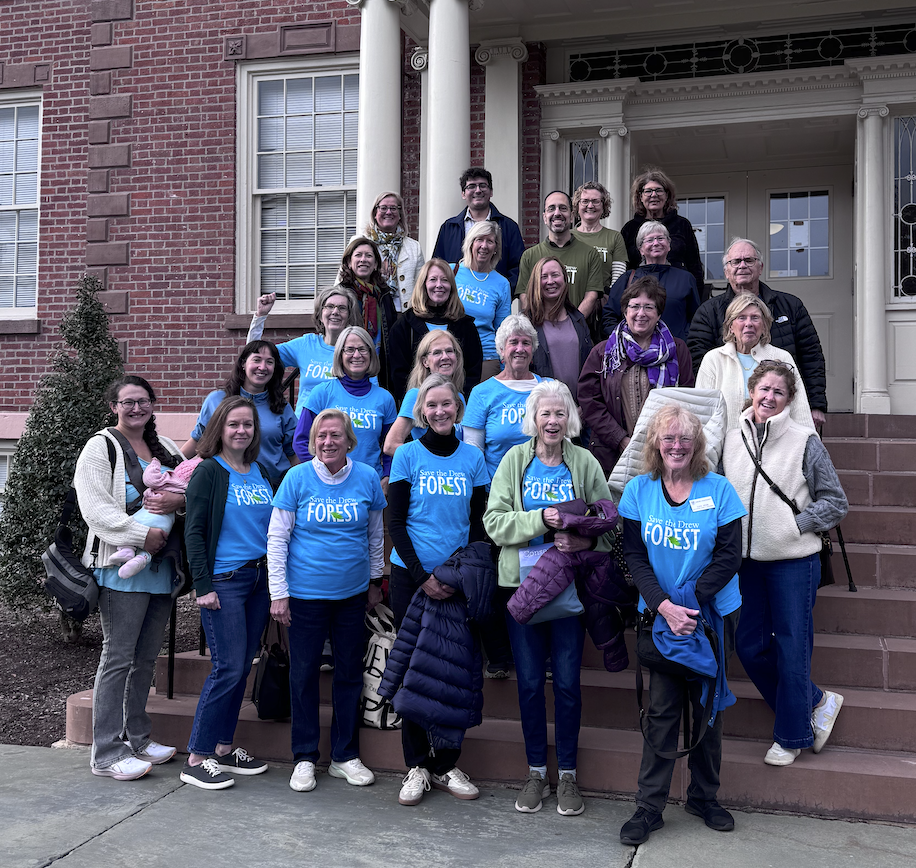
In the Oct. 30 ruling, State Superior Court Judge Stephan Hansbury stuck to his earlier decision that no housing needed to be built on the forest or the Drew campus as part of Madison’s third round affordable housing plan.
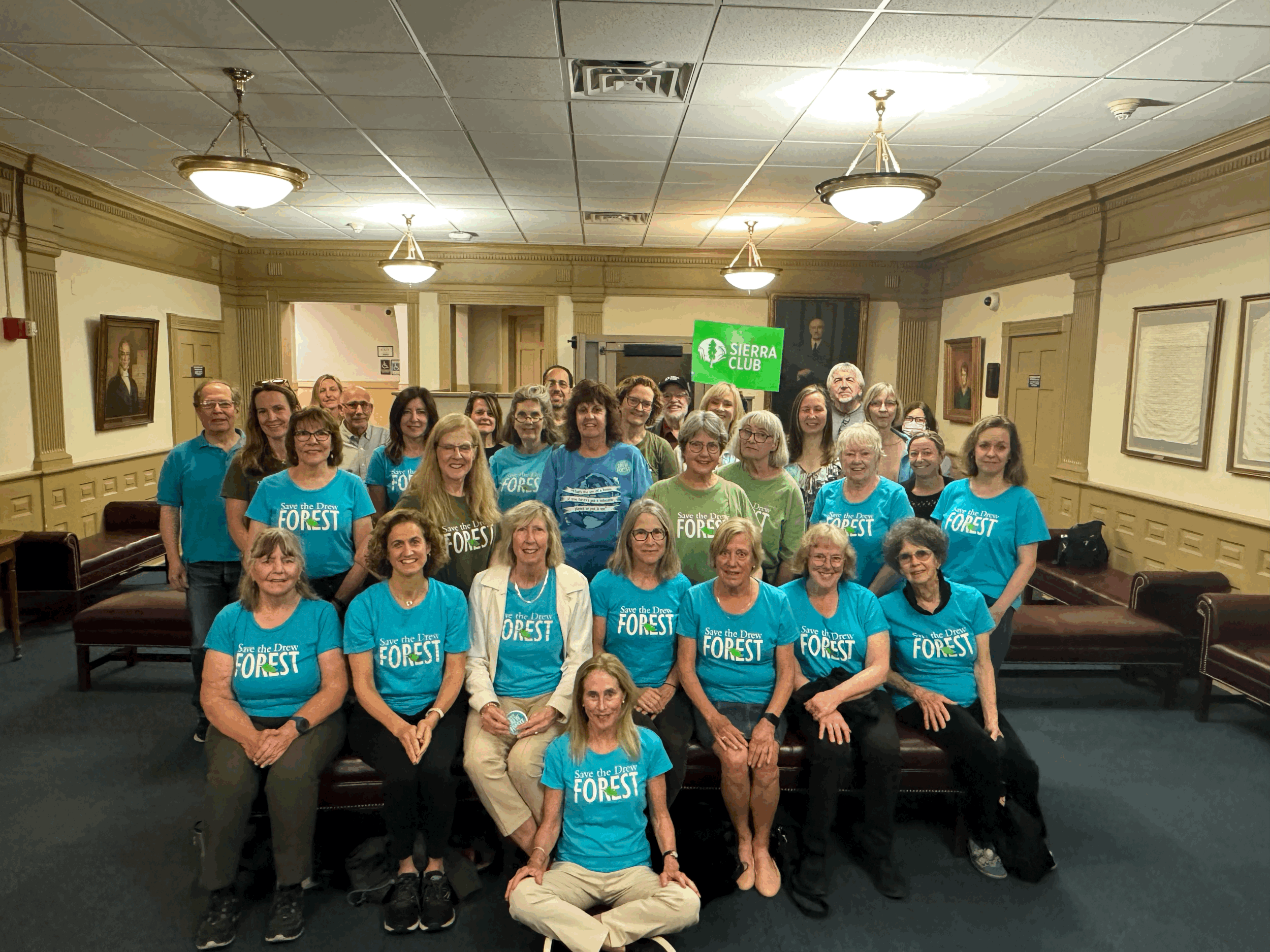
Members of the Friends of the Drew Forest packed state Superior Court in Morristown to hear arguments from Madison officials, Fair Share Housing Center and Drew University. For the past few years, the group has been advocating for preservation of the forest in perpetuity amid concerns of potential future development.
Hansbury ended up rejecting arguments that Madison’s affordable housing obligation should be revised beyond the additional 77 he ordered in February.
“It ended up being a very good day for the forest—and for Madison,” said Judy Kroll, co-chair of the Friends of the Drew Forest.
The fourth round of affordable housing was not discussed.
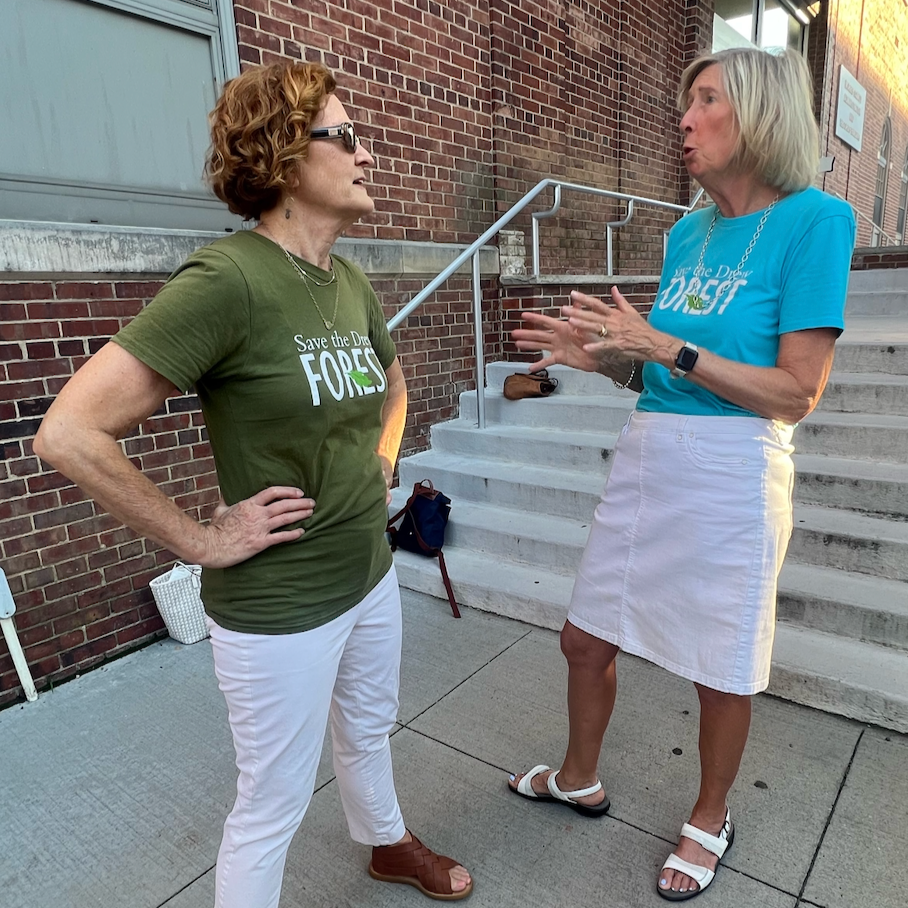
“We loved the fact that the judge commented on the continued community support for the Forest,” said Friends Co-Chair Lydia Chambers. “Our crowd included Drew alumni, a nursing mother and a broad range of forest lovers. The courtroom was filled with our bright blue ‘Save the Drew Forest’ T-shirts.”

TO THE EDITOR: It’s always great to table at Bottle Hill Day and meet fellow Drew Forest lovers. This year, Friends of the Drew Forest explained that the Forest is not yet saved—despite negotiations between Drew University and the borough, there is no contract for a purchase agreement. We then asked passersby if they’d like to express their thoughts to the Mayor and council and 86 did.
Many of the notes we received centered on the importance of the forest as a recharge area for the Buried Valley Aquifer, which supplies 100 percent of Madison’s drinking water.
Sen. Anthony Bucco wrote, “It’s time to get this done, you have my full support.” And residents wrote, “Mayor Conley, thank you for your efforts to support open space” and “Keep trying! We need more nature in this town and less building.”
We heard from a very special person in Mayor (Bob) Conley’s life, whose note said: “Please listen to your favorite principal. Save the Drew Forest!” The writer, Bob Newhouse, is 100 years old and was the fifth and sixth grade principal when Mayor Conley was enrolled in Madison Public Schools.
My favorite cards were from children. Ana and Duncan…[read more]
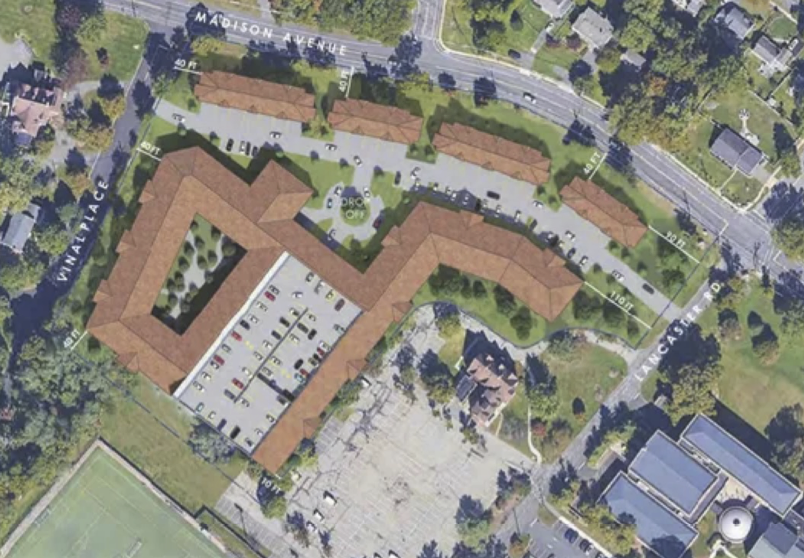
The path to preserving 51 forested acres on the Drew University campus once again appears in jeopardy after the school proposed building hundreds of residential units — despite a tentative agreement with Madison borough to save the property.
The borough's affordable housing plan, submitted to the state on June 23, includes details of a proposal by the university to build 492 residential units on two lots that are near, but not considered part of, the Drew Forest parcel. Those lots, totaling about 11 acres, are already under contract to North Jersey developer Avalon Bay.
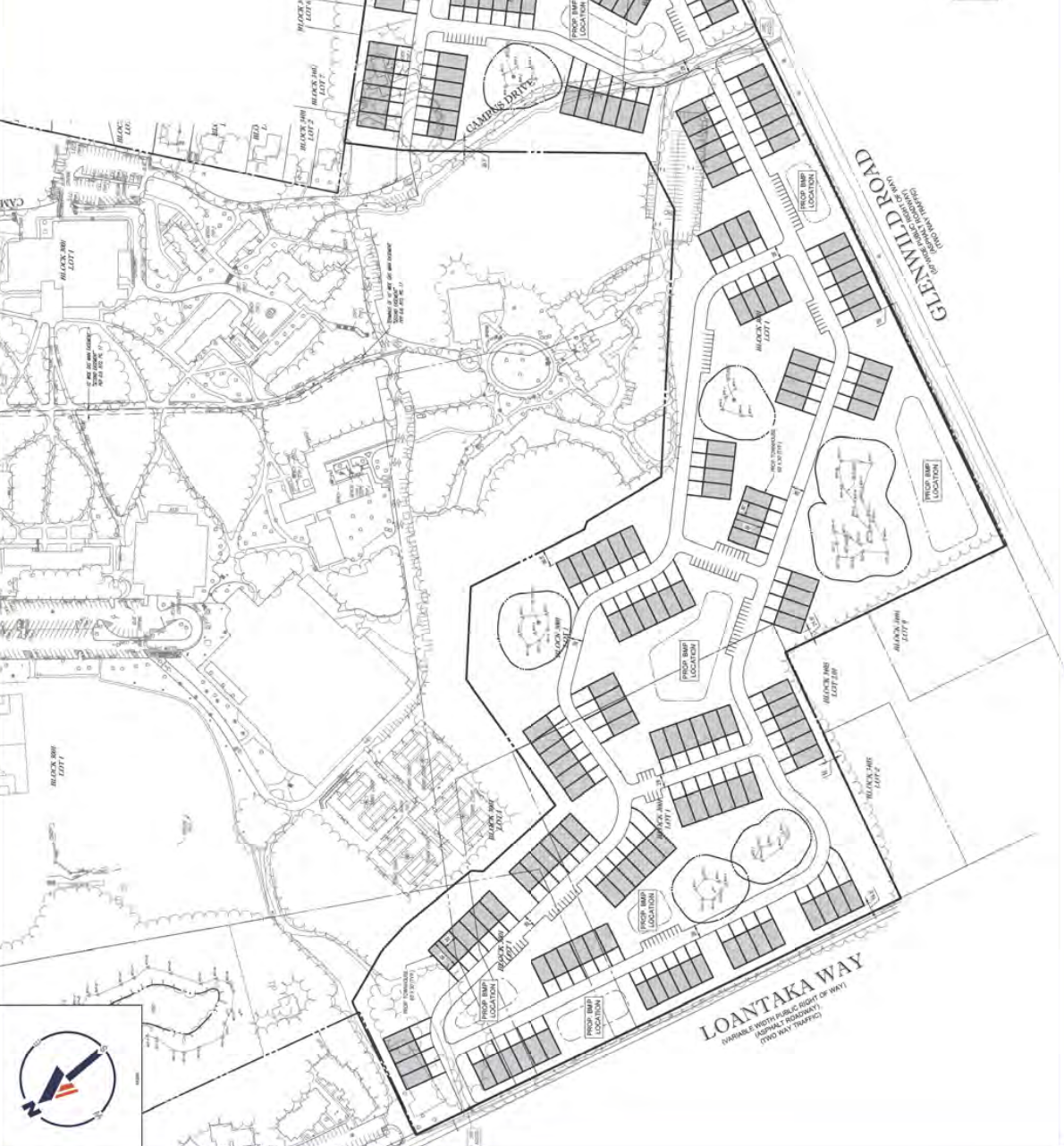
…That was expected by preservation advocates. But the university's proposal also identifies the two Drew Forest lots as "ideal" for a 208-unit townhome community. Those lots were not included in Madison's latest calculations of land considered to have redevelopment potential.
Has the forest deal gone south?
June 24, 2025, BRETT FRIEDENSOHN Managing Editor, Madison Eagle
MADISON – Drew University has submitted concepts for possible development of future housing in the Drew Forest, but the forest was not included in the borough’s fourth round affordable housing plan.
Included in the appendix was a concept by Drew and developer AvalonBay Communities, mapping out where hundreds of housing units could go in the forest and in other places on Drew’s campus…
This concept, dated Monday, April 21, contrasts with Drew and Madison’s nonbinding term sheet for $65.1 million dollar deal that will preserve the forest and pave the way for development on other parts of the campus.
The agreement, announced in November, involves Madison purchasing the Drew Forest for preservation in perpetuity. It also includes revenue from development on additional university land for multi-family, inclusionary residential housing units.
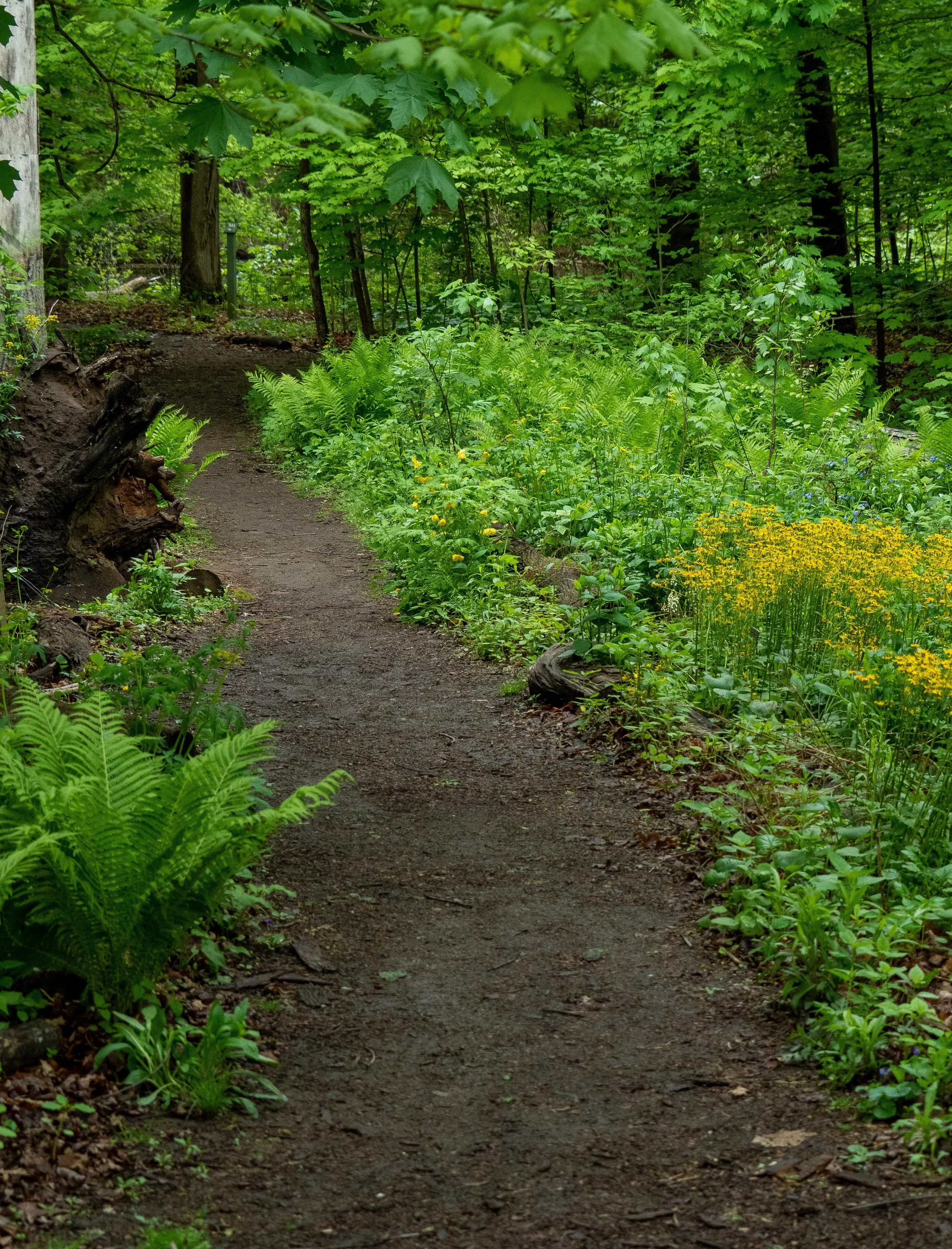
TO THE EDITOR: I’m Colette Crescas, a registered nurse and a member of Friends of the Drew Forest. I’m pleased to report that doctors are increasingly prescribing time in nature to their patients struggling with cardiovascular disease or anxiety. According to the Mayo clinic, research suggests a minimum ‘dose’ of 2 hours a week in a natural setting to maintain those desirable levels.
Trees and forests affect the multiple complex systems within our bodies. The sympathetic nervous system is responsible for what we know as the “flight or fight” response.. A 2017 study just 15 minutes in a forest had a calming effect that led to lower cortisol levels.
Forests help to boost our immune systems by directly releasing airborne chemicals called phytoncides. When we breathe these in, our bodies respond by increasing the number and activity of white blood cells. These cells are critical in fighting tumors, virus-infected cells, and many bacterial infections

May 8, 2025 Madison Eagle, Letter to the Editor by Colette Crescas,
The Friends of the Drew Forest would like to make residents aware of the impact of artificial nighttime light on insects and birds, particularly migratory birds. April – June is peak season for birds migrating north to and through New Jersey, and it might surprise some to know that many species travel long distances during the night. Area forests, including the Drew Forest, provide excellent “stopover habitat” for birds to rest and feed during the day.
These countless birds migrating through New Jersey need dark skies to survive and thrive. In fact, scientists are learning more every year about the negative effects of what they call “ALAN” - Artificial Light At Night - on both plants and animals (including humans). This is not surprising, since we all evolved over millennia with nights being dark and experiencing only natural light from the moon and stars.
Sadly, migrating birds are hurt in various ways, over and above the many millions who die in collisions with lit-up buildings. Birds navigate using natural light, and they get attracted to and confused by artificial light, causing them to waste energy. Certainly, they can’t afford to waste energy on their long, arduous migrations.
Lights can also render those important ‘stopover sites’ less suitable for rest and rejuvenation. In addition, artificial night can even change bird behavior, leading to males’ singing at new times of day. To let artificial lights shine near natural areas such as the Madison Recreational Complex would be horrible for birds.
Insects also get attracted to Artificial Light at Night and are either killed outright or die slowly from the loss of valuable energy spent pursuing artificial lights. Human lighting of the night is a key factor in the decline of insect populations, leading to less food for birds and bats and fewer pollinators for our plants.
Even trees are hurt by ALAN. Not only can bright night-time light influence a tree’s photosynthesis process, but artificial light also leads to trees becoming active too early in spring and staying active too late in the fall. Trees that are near artificial light at night are less healthy and have shorter lives than those that still enjoy the gift of natural darkness.

By Christine Hepburn
A version of this appeared on Apr 30, 2024 in the Madison Eagle, photo by Blaine Rothauser
If you are like most people (including me until my 40s), you hardly know what a warbler is, let alone take note of the many beautiful species that make up this group of migrating birds.
About 50 different species of these small, insect-eating birds with slim beaks can be found in North America, and 35 of these can be seen in New Jersey.
Each warbler species sings its own sweet song, but their voices don’t stand out if you ask me. I’d call them "flitters" rather than "warblers," given how active they are, constantly flitting from branch to branch.
Most warblers will just be passing through town, on the way further north after wintering anywhere from southern Texas down to Peru, depending on the particular species.
The long migrations are perilous times for the warblers who travel by night and rest during the day. “Stopover habitats” with trees and a water supply are very important and of course the Drew Forest provides a wonderful resource for these migrants, along with leafy yards.

We must be careful not to treat Drew University Forest as the sailors treated Macquarie Island. The forest lies atop the Buried Valley Aquifer. Chatham Borough relies on the Buried Valley Aquifer for its water supply, while Chatham Township supplements its supply through the aquifer.
The Friends of Drew Forest, a nonprofit dedicated to preserving the Drew University Forest, estimates that the forest recharges the aquifer with roughly 71.5 million gallons of rainfall filtered through the foliage each year.
Basing my estimate on the utility water rate charged by Chatham Borough in 2024, Drew University Forest provides our community with about $537,200 in water a year. Outsourced water incurs additional costs not found from local supplies.

MADISON – Mayor Robert Conley presented members of the Friends of the Drew Forest with a proclamation recognizing Friday, March 21 as International Day of Forests in the Rose City during the Borough Council meeting Monday, March 10.
The holiday has been recognized annually by the United Nations since 2012.
“It’s not only an eye to the valuable Drew Forest, which we’ve been working so hard to save, but also the National Forests which may be opened to greatly expanded logging,” Conley said in regards to the importance of the proclamation.
“This will not only devastate the forests, but also remove trees that cleanse our air. And if we don’t protect the forests right here in our country, how can we ask Brazil and other South American countries to preserve the Amazon, the lungs of the Earth? So this is a good reminder of the importance of forests.”

MADISON – The Drew Forest has two new benefactors: artists Margaret Malishchak and Molly Polevoy, who are collaborating on limited edition stained glass panels to help fund the Drew Forest’s conservation.
They are bringing their artwork to the Borough Council meeting Monday, March 24 at 50 Kings Road to show Mayor Robert Conley and elected officials.
“The Drew Forest is important to Molly and me,” said Malishchak, who lives in Madison’s Fairwood neighborhood close to the university.
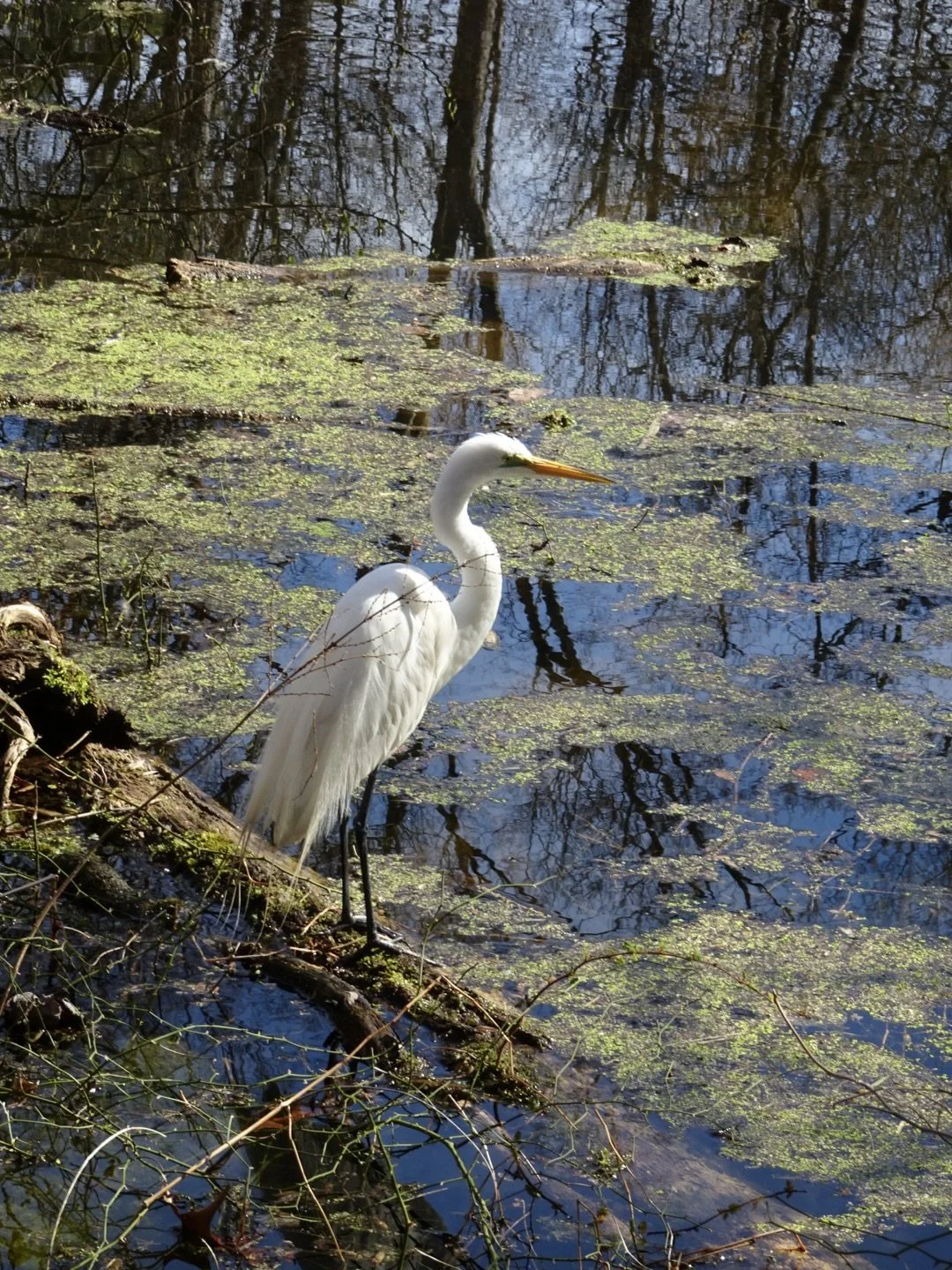
“The forest is one of the few remaining places where children can see turtles sunning on logs, where Blue Herons fly and native bluebells pop up in spring.”
Malishchak started Glass4Good five years ago so that she could “use art to create more good in the world.” She donates all proceeds from sales—some $16,000 so far—to various state and local environmental and social justice groups.
We believe that the entire Drew Forest should be preserved. It is treasured by the community for its ecological, educational, and recreational value.
We also believe this Court’s decision which considers approximately 35.6 of the 51.6 acres to be developable is flawed. We stand by our independent ecological expert who determined that that the Drew Forest “has extremely high value as a preserved open space where it can continue in its current capacity.”
Development of the property would eliminate a significant source of groundwater recharge to the Buried Valley Sole Source Aquifer. It would also disrupt ongoing public and student use of the land and long-term research projects that are being carried out there. It would remove identified habitat for the federally endangered Indiana bat and many irreplaceable large trees.
By BRETT FRIEDENSOHN Managing Editor Mar 7, 2025
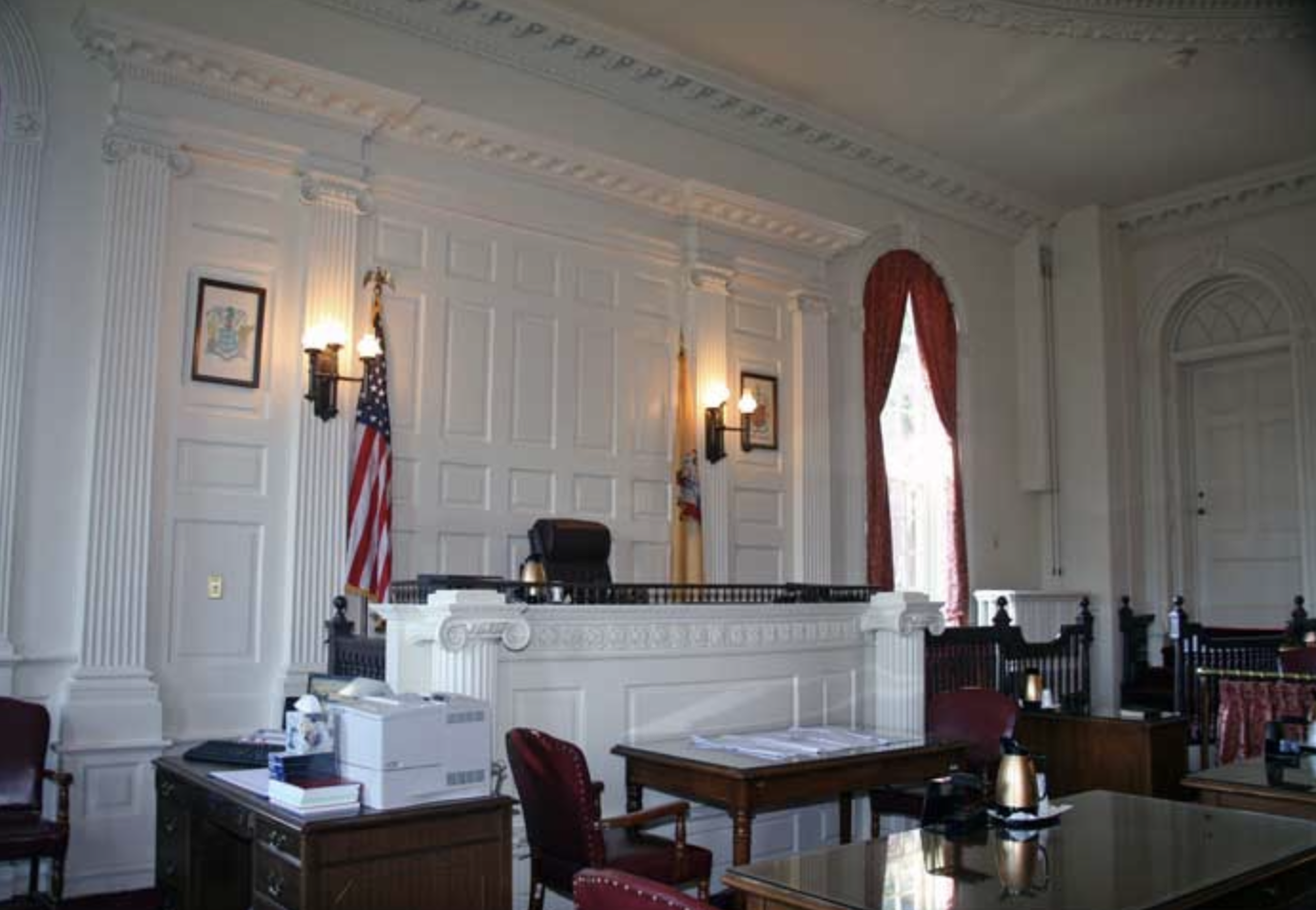
MADISON – The borough Thursday, March 6 appealed a state Superior Court court ruling saying that almost two-thirds of the Drew Forest is developable.
State Superior Court Judge Stephen Hansbury said in a ruling Friday, Feb. 14 that about 35.6 of the forest’s 51.6 acres is developable.
The next step after the state Superior Court is the Appellate Division of the Superior Court. “While the legal process continues, we remain open to settlement discussions with Drew University,” the Borough of Madison said in a statement.
“From the start, Madison has viewed affordable housing as a moral responsibility, not just a legal obligation. We remain committed to preserving the Drew Forest—a vital natural resource for Madison and surrounding communities—while also ensuring the development of affordable housing, in a way that best serves the taxpayers of Madison.”The Friends of the Drew Forest said in a statement that the decision is flawed.
“We believe that the entire Drew Forest should be preserved,” the Friends said. “It is treasured by the community for its ecological, educational, and recreational value.”

“Congratulations on saving the Forest!”
“Great news on the Forest. Now you can relax.”
“You must be so relieved. Great work!”
Friends of the Drew Forest has received messages like these over the past two months from well-wishers who support our journey to preserve the beloved Drew Forest.
We wish we could relax

Our lyrics included this message: :”It’s a holly jolly forest/And it’s loved by one and all./ We should agree that it must be/Forever standing tall.”
We were thrilled to be joined by Spotlight Kids Company because saving a forest is work that's done for future generations.

Madison, NJ — The Borough of Madison and Drew University are pleased to announce we have reached a landmark agreement, signing a term sheet to preserve the Drew Forest. This agreement marks a significant step forward in the collective effort to protect this vital natural resource for generations to come. The agreement, which involves the Borough of Madison purchasing the Drew Forest for preservation in perpetuity, also paves the way for the sale of additional university land for the development of multi-family, inclusionary residential housing units, with the Borough also acquiring ownership of frontage along Madison Avenue, including Madison House.
The Drew Forest Preserve, 51 intact acres with mature trees and glacial ponds on Drew University’s 163-acre campus, is an irreplaceable natural resource because of its unique diversity and features. Providing critical recharge for the Buried Valley Aquifer for 31 municipalities in Morris, Essex, Somerset, and Union counties, the preservation of this forest preserve will be a benefit to Madison and the region. Among these benefits are 22 acres of public trails, impossible-to-replicate carbon sequestration, and unique regional opportunities for education. Under the agreement, Drew University will retain the right to continue to use this land, as it currently does, for educational, research and community purposes.
Going forward, Drew University and the Borough of Madison will work together toward the closing of the Drew Forest acquisition, and the rezoning and subdivision of two other parcels of university property, with an anticipated closing in the second quarter of 2025.
Madison Eagle Oct 27, 2024 Updated Oct 29, 2024
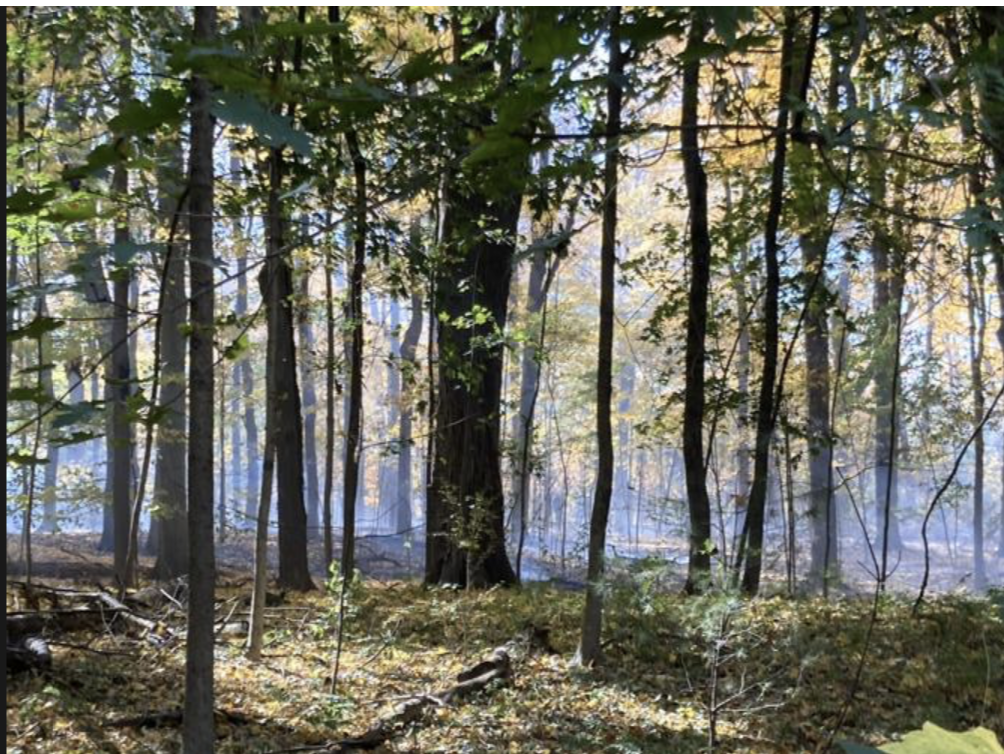
MADISON – A fire that ignited in up to two acres at the Drew Forest was under control Saturday, Oct. 26, according to George Efinger, assistant division warden of Division A in the New Jersey Forest Fire Service.
There wasn’t too much damage to the plants or the forest itself, according to Sara Webb, a member of the Friends of the Drew Forest Steering Committee and professor emerita of environmental science and biology at Drew University.
Claire Whitcomb, Madison Environmental Commission Chair, pointed out the Forest has undergone a 15-year restoration, and there were two acres that were choked by Asian wisteria, an invasive species. Had the vines been there, they would have served as ladder to the canopy, she said.

By BRETT FRIEDENSOHN Managing Editor, Madison Eagle Oct 21, 2024 Updated Oct 22, 2024
MADISON – Members of the Friends of the Drew Forest were left “puzzled” by a note on the door when they delivered a poster with several signatures supporting forest preservation to the office of Drew President Hilary Link Friday, Oct. 18.
The note, addressed to the Friends, said that Drew University is also committed to preserving the Drew Forest and Zuck Arboretum. The Friends left the poster at the foot of Link’s office door which was locked.
“The ball is currently in Madison’s court to approve the redevelopment of Drew’s non-forest surplus land,” the note said. “As soon as that happens, Drew is eager to move forward with preserving the forest.”
Friends Co-Chair Judy Kroll of Madison said there’s a Planning Board process that has to go forward before anything can be developed on the non-forested surplus land.
“We believe that the university also wants to save the forest, but the process they’re describing and that note on the door is not possible,” Kroll said.
Madison Urges Drew University to Accept Final Offer
Total offer valued at $65.1 million
Madison, NJ – September 9, 2024 – In July, after more than two years of negotiations, the Borough of Madison made a final offer valued at more than $65 million. Unfortunately, Drew has not yet accepted that offer. The Borough implores Drew University leadership and its Board of Trustees to accept this offer without delay. While the offer remains on the table, upcoming deadlines for court filings and the potential expiration of grant funds secured for the purchase of the Forest will mean that the offer will be withdrawn as Madison will not fund lost grants with local tax dollars or debt.
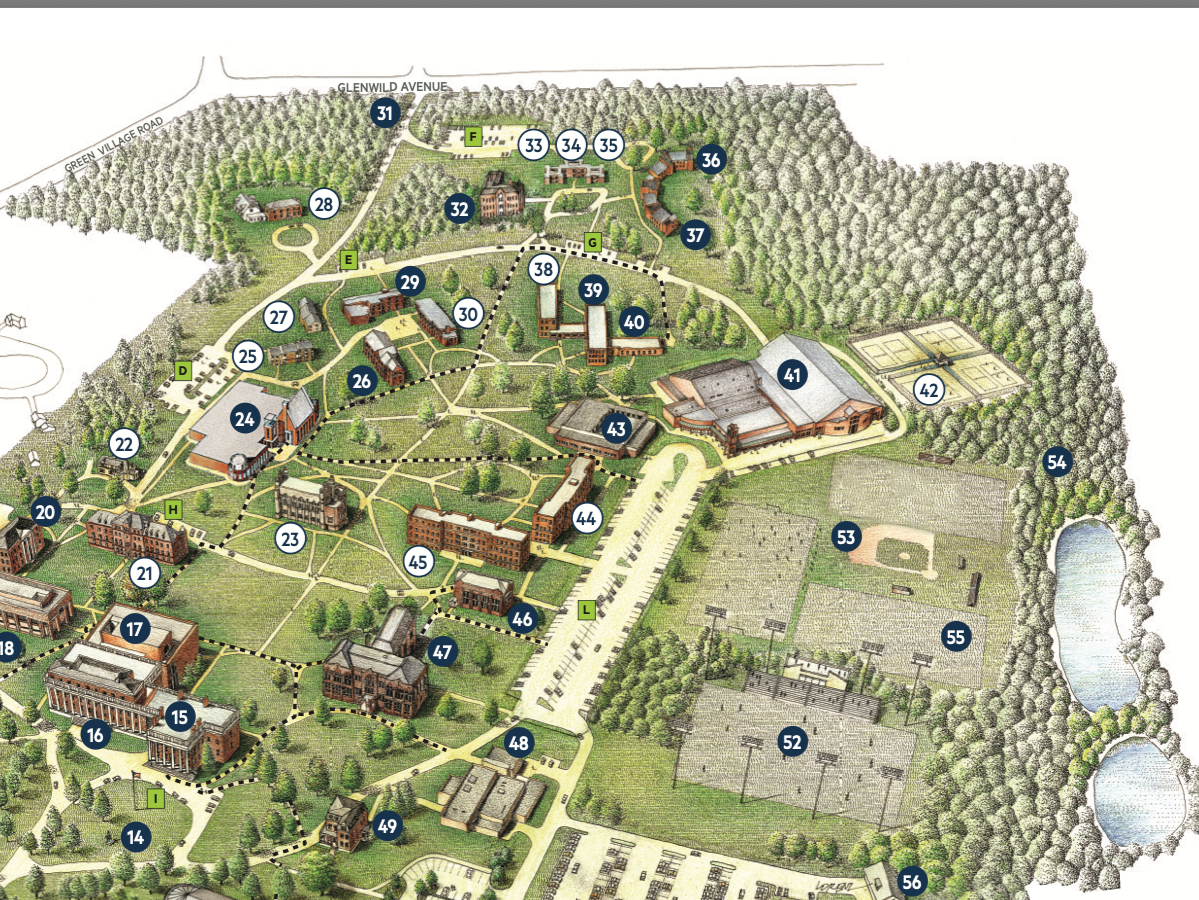
The Borough’s comprehensive proposal includes acquiring and preserving approximately 51 acres of forested land, including the Zuck Arboretum, Hepburn Woods, and properties along Glenwild and Green Village Roads. Additionally, the offer allows for residential development on other parts of the Drew campus, consisting of both affordable and market-rate apartments.
Madison has collaborated with various stakeholders, including Federal, State, and County officials, the Friends of the Drew Forest, potential private donors, and the Fair Share Housing Center, to support the forest’s purchase. The Borough continues to negotiate in good faith, as our current offer is, in fact, 30% more than a previous offer made in March 2023.
The Borough extends our gratitude to the Friends of the Drew Forest, the 15,000+ community members who signed the change.org petition, environmental advocates, and various government officials—including Senator Booker, Congresswoman Sherrill, New Jersey Senators Bucco and McKeon, Morris County Commissioners, and members of the Morris County Open Space Committee—who continue to support our efforts. The Borough reaffirms our commitment to protecting the Drew Forest and urges the public to remain engaged in this important cause.

 Friends of the Drew Forest
The Friends of the Drew Forest is a volunteer organization dedicated to protect and sustain the Drew Forest Preserve, 53 biodiverse acres that provide countless benefits to Drew University, Madison Borough and surrounding communities along with critical wildlife habit.